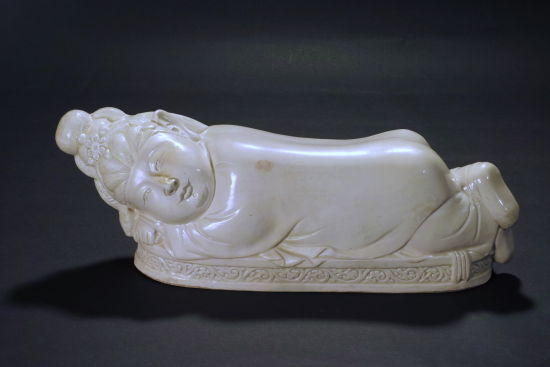
Porcelain Pillow
Introduction
Porcelain pillows are a distinctive cultural artifact originating from China, showcasing both the artistic merit and functional innovation of ancient Chinese craftspeople. Unlike the soft textile pillows we are familiar with today, porcelain pillows are rigid and were primarily crafted from ceramic materials. These pillows hold significant historical value and reflect the aesthetic and social customs of their respective eras. They emerged in ancient China and were prevalent from the Sui Dynasty through the Qing Dynasty, serving various purposes beyond mere headrests.
Historical Development
Sui Dynasty Origins
The inception of porcelain pillows can be traced back to the Sui Dynasty (581-618 AD). The earliest example discovered was a box-shaped porcelain pillow unearthed from the tomb of an official named Zhang Sheng in Anyang, Henan. This indicates that by the Sui period, porcelain pillows were already being used, albeit initially as funerary objects.
Tang and Song Dynasties
During the Tang Dynasty (618-907 AD), porcelain pillows gained popularity and diversified in function. They were not only used for sleeping but also played a role in traditional medicine; for instance, they were used to support a patient's wrist during pulse diagnosis. Travelers also carried them as portable sleeping aids. With the advancement of ceramic techniques, these pillows became more aesthetically appealing, often adorned with landscape paintings, poetry, or crafted in animal shapes symbolizing auspicious wishes.
The Song Dynasty (960-1279 AD) marked the zenith of porcelain pillow production, with significant advancements in both scale and decorative techniques. Porcelain pillows from this era, such as the white infant-shaped pillow from the Northern Song Dynasty, are considered masterpieces. These pillows were crafted with intricate designs and were often fully glazed, providing a smooth and slightly colored finish.
Yuan to Qing Dynasties
The Yuan Dynasty (1279-1368 AD) introduced certain restrictions that led to a decline in the production of porcelain pillows. However, they remained fashionable, with some crafted in architectural forms or decorated with motifs from popular dramas and poetry. The blue-and-white porcelain pillows from Jingdezhen are notable for their intricate carvings.
During the Ming (1368-1644 AD) and Qing (1644-1911 AD) dynasties, the preference shifted towards softer pillows, and the production of porcelain pillows gradually declined. Nevertheless, during the mid-20th century, porcelain pillows were still being manufactured in Northern China.
Cultural Significance
Social and Artistic Value
In ancient China, maintaining one's hairstyle was important due to elaborate headgear, and hard pillows aided in this by providing cooling relief and stability for the neck and head. Additionally, these pillows were often artistically decorated with motifs that conveyed good wishes or depicted scenes from daily life.
Symbolism and Craftsmanship
Porcelain pillows were also symbolic, often representing ideals such as prosperity, health, and longevity through their forms and decorations. The craftsmanship involved in their creation, particularly those from renowned kilns like the Ding Kiln, epitomized the high level of skill and artistry of Chinese ceramics. The Ding Kiln, for instance, was famous for its "thin as paper, white as jade" porcelain, with the baby-shaped pillow being one of its most famous works.
Decline and Legacy
Despite their decline in everyday use, porcelain pillows remain a testament to the rich cultural and artistic heritage of ancient China. They have been preserved as valuable historical artifacts and are displayed in museums, such as the Palace Museum in Beijing, which holds some of the most exquisite examples of these artifacts.
Porcelain pillows, although not commonly used in contemporary times, continue to capture the interest of historians, collectors, and art enthusiasts. Their enduring legacy is further celebrated through exhibitions and cultural events that highlight their historical and artistic significance. These pillows not only offer insights into the daily life and customs of ancient China but also serve as enduring symbols of the country's rich ceramic tradition.








